Fungus Toenails
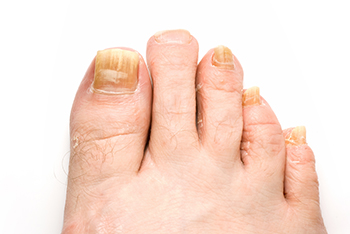 The area of the toes is generally warm and damp, unfortunately making it a great area for fungus to grow. If left untreated, the fungal infection can spread, which is why it’s so important to get professional help early on and look into your treatment options.
Fungal infections occur due to fungus getting through the cracks of the toes or cuts in your skin. Common signs that you may have a fungal infection include thicker than normal toenails, oddly shaped toenails, discoloration, a yellowish hue to the nail, and separation of the nail and nail bed. Fungal infections can affect anyone but are most common among men, those with diabetes or athlete’s foot, and smokers. The risk of having toenail fungus also increases as you age, if another family member has it, and if you have a weaker immune system.
Fungal Toenails Prevention Tips
To avoid getting a fungal infection, it’s important that you wash your feet daily with soap and water, making sure to get in between your toes, and dry the feet well. When cutting your toenails, make sure the clippers you’re using are clean and that you’re cutting straight across. It’s also important that you wear shoes in areas where fungus can thrive, such as wet public places like swimming pools or locker rooms.
Toenail fungus can also be treated with certain over-the-counter antifungal creams and ointments. To remove pressure from the nails, keep them cut at a short length. Oral antifungal drugs, medicated nail cream, or medicated nail polish may also be prescribed by your podiatrist if simpler treatments do not prove successful. In some cases, your podiatrist may also recommend laser treatment to eradicate toenail fungus.
Patients should visit their local podiatrist if they suspect they have toenail fungus. In its more severe stages, toenail fungus can become very painful. Other infections can develop from toenail fungus that can spread to other parts of the body. Upon examination for fungus, your podiatrist may scrape your nails if he or she finds debris. This sample will be sent to a lab to determine what fungus is causing the condition.
Laser Treatment for Fungal Toenails
Toenail fungus is notoriously difficult to cure with over-the-counter medicines. From foot soaks to ointments the efficacy of these is extremely varied, at best. 2010 the FDA approved the first laser treatment for toenail fungus. This was the first of the “cold laser” treatments to gain federal approval. The laser kills the fungus in and under the nail, ridding it of the infection.
The treatment itself is non-invasive and very straightforward. The podiatrist will move the laser in a grid-like pattern over the infected toenail. This is a virtually pain-free procedure that generally takes less than 30 minutes, though it could take longer depending on how many nails are infected. After the procedure, the appearance of the nail will not have changed. While the fungus has been killed, the nail will have to grow out in order to see the effect of the treatment.
Laser toenail fungus treatments are now used all over the world and can be performed by a podiatrist in-office. The number of treatments it will take to cure the fungal infection varies by patient and type of laser. Speak with your podiatrist to learn more about getting rid of your toenail fungus.
If you believe you’re experiencing a fungal toenail infection, we recommend that you speak with a podiatrist as soon as possible for a proper diagnosis and suggested plan for treatment.
Toenail Fungus FAQs
1. What are fungal toenails and how do they develop?
Fungal toenails happen when fungi infect the nail plate or the skin underneath it. The infection usually starts after exposure to somewhere warm and moist, a locker room, a pool, or a pair of sweaty shoes. Small cracks in the nail or the skin around it let the fungi in, and over time the infection works deeper into the nail, which makes it harder to treat. Toes are affected more often than fingers because they spend more of the day enclosed in shoes.
2. What causes fungal toenail infections and who is most at risk?
The fungi behind these infections thrive in warm, moist conditions, so sweaty shoes, public showers, and locker rooms are the usual sources. Minor nail injuries and a history of athlete’s foot can also lead to one. Older adults, people with diabetes, anyone with a compromised immune system or poor circulation, those with a family history of fungal infections, and people who habitually wear closed, non-breathable footwear all face higher risk.
3. What are the typical signs and symptoms of a fungal toenail infection?
Nails turn thickened, discoloured, or brittle, often yellow, white, or brown. They may lose their shape, crumble, or lift away from the nail bed. Some people notice an unpleasant odour or mild pain under pressure. Where the surrounding skin becomes red, irritated, or inflamed, it is time to have it looked at promptly.
4. Are fungal toenails painful or just a cosmetic concern?
Early on they are often painless. As the nail thickens or lifts away from the bed, pressure and discomfort follow, and pain can show up when wearing shoes or walking. In advanced cases the surrounding skin becomes irritated. It affects both how the toes look and how they work.
5. How do fungal toenails affect foot health overall?
They interfere with normal nail growth and with comfort. Thick or distorted nails press against shoes and against neighbouring toes, which can irritate the skin and create secondary problems. For anyone with reduced circulation or sensation, complications develop more readily. Keeping the nails healthy supports comfort and mobility generally.
6. How are fungal toenail infections treated effectively?
Topical or oral antifungal medication depending on severity. Topical treatments go directly onto the nail, while oral medication works through the body. Laser therapy or professional nail debridement may be used to reduce thickened or damaged nail tissue. Sticking with treatment and keeping the nails clean is what secures full recovery and prevents it returning.
7. Why do fungal toenails take so long to clear?
Toenails grow slowly, so improvement takes time even once the fungus is under control. Treatment has to continue while healthy nail gradually replaces infected nail. Stopping early lets the fungus persist, and thick nails limit how well medication penetrates in the first place. Patience and consistency matter more here than on most conditions.
8. Can fungal toenail infections be prevented or recur after treatment?
Prevention means keeping the feet clean and dry, choosing breathable shoes and moisture-wicking socks, and not walking barefoot around pools or locker rooms. Trimming nails regularly and disinfecting footwear help too. Infections can return even after successful treatment, particularly where those measures lapse or where diabetes, poor circulation, or a weakened immune system is a factor.
9. What does FDA-cleared mean in relation to laser treatment?
FDA-cleared means the device has been reviewed and approved for safety and for its intended use. For fungal nails, that clearance relates to improving the appearance of infected nails. It does not guarantee a cure of the fungal infection. Clearance confirms the device meets regulatory standards, and that distinction matters when setting expectations about results.
10. Is laser treatment for fungal nails painful?
Most patients find it tolerable. A warming or tingling sensation is common during the procedure and it stops when the treatment does. No anesthesia is usually needed. How much you feel depends on nail thickness and on individual tolerance.
11. How many laser sessions are typically needed to treat a fungal nail infection?
It depends on how severe the infection is, how many nails are involved, and how you respond. Two to four sessions spaced a few weeks apart is typical. Follow-up appointments track progress, and more sessions may be suggested if the infection persists or the nails are slow to grow out.
12. Can laser treatment be combined with other fungal nail treatments?
Yes, and it often is. Professional nail trimming reduces thickness and helps the laser penetrate. Topical antifungal products may be recommended alongside it. Working from several angles tends to improve results, and a podiatrist decides the right combination.
13. Where can I get treatment for toenail fungus in New York City?
Emmanuel Bustos, DPM treats fungal toenails at 2599 Broadway, New York, NY 10025, on the Upper West Side. Patients also travel in from Brooklyn, Queens, the Bronx, and Staten Island. Call (212) 663-3668 or request an appointment online.
14. Do I need a lab test before starting toenail fungus treatment?
Not always, but it is common. During the examination the podiatrist may scrape the nail if debris is present and send the sample to a lab to identify which fungus is responsible. Knowing that guides which treatment is likely to work, which matters given how long nails take to grow out. Call (212) 663-3668 to arrange an examination.
