Heel Pain Treatment in New York, NY
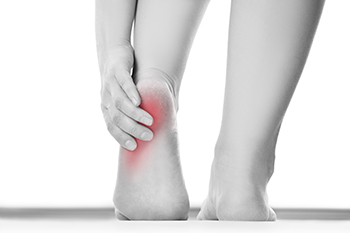 Heel pain, while quite common, can be extremely uncomfortable and painful if not met with proper care or treatment. Heel pain may occur if you injure or overuse the heel. If left uncared for, the affected area may worsen, limiting your mobility and making it difficult to perform everyday activities, such as walking.
Causes of Heel Pain
There are many different causes of heel pain, including strains or sprains, tarsal tunnel syndrome, stress fractures, achilles tendonitis, and heel bursitis. One of the most common causes of heel pain for children and teenagers specifically is Sever’s disease. Sever’s disease can develop due to overuse or repetitive microtrauma of the heel bone's growth plates. This condition is often seen among those who are active in sporting activities.
Other causes of heel pain may include issues with poor circulation, poor posture when walking or running, a soft tissue mass, and a rupture of the achilles tendon. To help ease the discomfort of heel pain, it’s advised that you get plenty of rest, apply ice to the affected area, and wear shoes that fit properly. In some more serious cases, a podiatrist might recommend the use of custom orthotics or shoe inserts for extra support.
There are various options your podiatrist may suggest for heel pain. Treatment options for heel pain typically include non-steroidal anti-inflammatory drugs (NSAIDS), which may reduce swelling and pain. Other options are physical therapy, athletic taping, and orthotics. In severe cases of heel pain, surgery may be required.
Preventing heel pain is possible. If you’re experiencing heel pain, we recommend you consult with a podiatrist as soon as possible for a proper diagnosis and treatment plan.
Shockwave Therapy
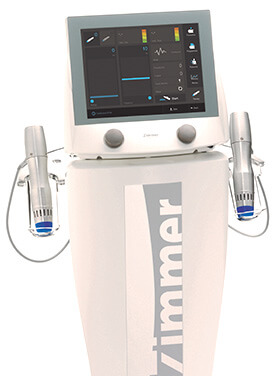
Zimmer Short - enPuls Podiatry 2019
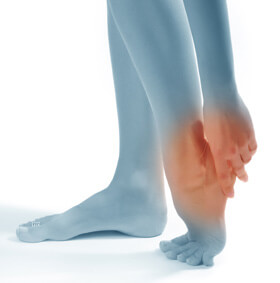
What is Radial Shockwave Therapy?
Radial Shockwave Therapy is an FDA cleared technology proven to increase the rate of healing for soft tissue tendinopathy. It is an advanced, non-invasive and highly effective treatment method that enhances blood circulation and accelerates the healing process causing damaged tissue to gradually regenerate.
What conditions can be treated with RSWT?
- Rotator Cuff Bursitis
- Golfers / Tennis Elbow
- Hip Pain
- Patellar Tendinopathy (Knee Pain)
- Plantar Fasciitis (Foot / Heel Pain)
How does RSWT work?
When you experience chronic pain, your body no longer recognizes that there is an injury to that area. As a result, it shuts down the healing process and you feel no relief. The ballistic sound waves of the Enpuls penetrate deep through your soft tissue, causing a microtrauma or new inflammatory condition to the treated area. Once this occurs, it then triggers your body's natural healing response once again. The energy emitted also causes the cells in the soft tissue to release certain bio-chemicals that intensify the body's natural healing process. These bio-chemicals allow for the building of an array of new microscopic blood vessels in the soft tissue.
What do studies show?
There have been extensive studies done on Radial Shockwave Therapy over the past 20 years. These studies show between a 72% – 80% success rate.
How is RSWT performed?
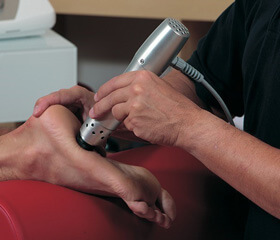
The system is a machine with an applicator that looks like an ultrasound. It is administered once a week for a series of 4 to 5 treatments. Each treatment takes approximately 5 minutes depending on the size and number of areas treated.
All treatments are performed by experienced professionals. The Doctor applies the applicator to the area and administers the ballistic waves by moving over the affected area in a very slow, circular motion. During the treatment, there may be some minor discomfort. Painful areas are helpful in isolating the truly injured areas.
Why consider Radial Shockwave Therapy?
RSWT has a proven success rate that is equal to or greater than that of traditional treatment methods, including surgery, without the risks, complications, and lengthy recovery periods. There are no incisions and no risk of infection, or scar tissue, like with surgery. There is no need for anesthesia to be administered during the treatment, as opposed to high-energy shockwave therapy. Patients treated with RSWT may be active immediately and resume their normal routine the same day. Many patients find a significant and immediate reduction in their pain. Some patients will feel results gradually after each treatment.
Why RSWT instead of Physical Therapy?
Physical therapy is 2 to 3 times a week, for 6 weeks and you are at the facility for no less than an hour. More importantly, there is usually a co-pay required for every visit which could be $40 or more. Over a six week period or 15 visits, this can add up to $600 in out of pocket co-pays. The RSWT treatments are only once a week, for 5 minutes each. This is a highly effective modality which is faster and more effective than Physical therapy, and the cost of the RSWT treatments are usually LESS than the total of your PT co-pays. If you want fast results in less time, and would like to save money, the RSWT treatment is a better choice.
What are the possible side effects?
There have been very few side effects reported. In rare cases, skin bruising may occur. Patients may also feel soreness in the area for a day or two afterward, similar to a strenuous workout.
Will I be in pain afterward?
A day or two after the treatment you may feel a slight discomfort like a bruise, but that is normal and is a sign the treatment is working.
Is it covered by my Insurance?
No. RSWT is not covered by insurance plans
