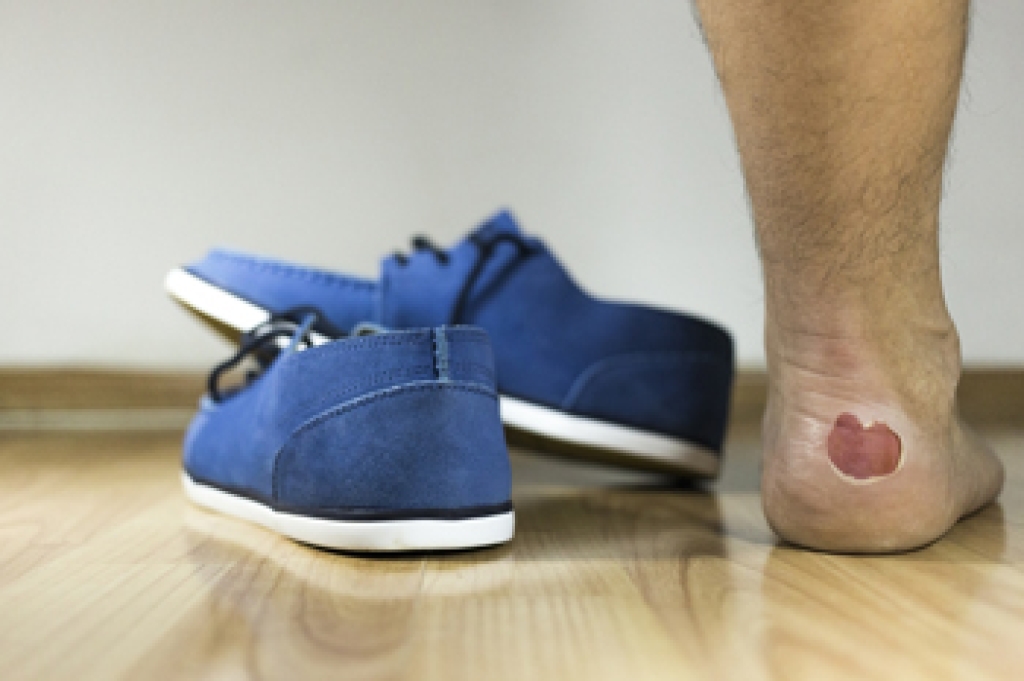
The Prevention and Care of Blisters

Blisters on the feet can put a damper on enjoying everyday activities. They are defined as small pockets of fluid that naturally form over damaged skin. A blister is filled with protective liquid that protects the raw skin. It will gradually drain on its own when new skin has formed. It is important to learn about how to prevent blisters from developing, and there are simple methods that can be implemented. These can include wearing shoes and socks that fit correctly, and removing any pebbles that may have gotten into the shoes or socks to avoid irritation. Additionally, it is beneficial to remove the socks at the first sign of tenderness or redness. A protective covering can be worn over the blister, and this is generally effective in preventing premature popping. If you would like more information about how to treat existing blisters and to learn about additional prevention methods, please consult with a podiatrist.

Blisters are prone to making everyday activities extremely uncomfortable. If your feet are hurting, contact Emmanuel Bustos, DPM of New York. Our doctor can provide the care you need to keep you pain-free and on your feet.

Foot Blisters

Foot blisters develop as a result of constantly wearing tight or ill-fitting footwear. This happens due to the constant rubbing from the shoe, which can often lead to pain.

What Are Foot Blisters?

A foot blister is a small fluid-filled pocket that forms on the upper-most layer of the skin. Blisters are filled with clear fluid and can lead to blood drainage or pus if the area becomes infected.

How Do Blisters Form?

Blisters on the feet are often the result of constant friction of skin and material, usually by shoe rubbing. Walking in sandals, boots, or shoes that don’t fit properly for long periods of time can result in a blister. Having consistent foot moisture and humidity can easily lead to blister formation.

Prevention & Treatment

It is important to properly care for the affected area in order to prevent infection and ease the pain. Do not lance the blister and use a Band-Aid to provide pain relief. Also, be sure to keep your feet dry and wear proper fitting shoes. If you see blood or pus in a blister, seek assistance from a podiatrist.

If you have any questions, please feel free to contact our office located in the Upper West Side and New York City, NY . We offer the newest diagnostic and treatment technologies for all your foot care needs.

Read more about Blisters on the Feet

Understanding Shin Splints

Shin splints occur when muscles that connect with the shin bone (tibia) located under the knee become irritated and inflamed from overuse. The medical term for shin splints is medial tibial stress syndrome, also known as MTSS. This condition can occur in physically active individuals and athletes when they do not warm up adequately, increase the intensity of their workouts too rapidly, run on hard surfaces, or wear improper shoes. Pain can be felt across the shin, from the knee to the ankle, and can sometimes be mistaken for other conditions. If you believe you are developing shin splints, consult with a podiatrist who can accurately diagnose and treat your condition. Some treatment methods may include custom orthotics, anti-inflammatory medications, physical and massage therapy, and recommending proper footwear. If you are a runner, your podiatrist will evaluate how you run and offer suggestions for stride modifications.

Foot therapy is often necessary for those recovering from either foot deformities or foot injuries. If you have concerns regarding therapy, consult with Emmanuel Bustos, DPM from New York. Our doctor can provide the care you need to keep you pain-free and on your feet.

Most Common Injuries

People who are active or athletes are prone to a variety of injuries. Therefore, it is often important to take part in physical therapy in order to quickly get back on the right track. 

What to Do When Injured

Physical Therapy – This specialized treatment will focus on the affected area, speeding up recovery and the overall healing process. It is a proven method that has helped millions of people return from any injury.

During physical therapy you will undergo regimented training to get back into full form. Training is often very difficult, especially at first when the foot feels weak. Physical therapy often involves:

Basic stretching and twisting exercises – getting the feet’s mobility and flexibility up.

Massaging – the therapist will massage the injured area in order to activate the muscles and relax them.

Strengthening Exercises – this allows the muscles in the affected area to regain their full strength, a vital step towards full recovery.

If you have any questions, please feel free to contact our office located in the Upper West Side and New York City, NY . We offer the newest diagnostic and treatment technologies for all your foot care needs.
Read more about Foot Therapy for Sports Injuries

Why Arch Support Is Essentials for Runners

The arch of the foot functions in three major ways. First, it serves as a shock absorber when you walk, run, and jump. Second, it serves as a stabilizing factor for activities on all types of surfaces. Third, the arch of the foot helps to distribute your weight across the entire foot, rather than just on the heel or ball. As a runner, it is extremely important to find shoes that offer the necessary arch support. The needs differ according to whether you have flat feet, normal arches, or high arches. Many running shoes will accommodate someone with normal arches. Those with flat feet, however, may wish to look for shoes with a well-cushioned middle and a wider toe box. By contrast, high arches generally put more pressure on the ball of the foot causing it to roll outward. Shoes with extra cushioning and high insoles may help. In some cases, orthotics may be used to help counteract your specific condition. Custom orthotics can be made by a podiatrist. If your feet consistently hurt after a run you may wish to consult a podiatrist for an examination to determine whether the pain is related to arch problems, as well as recommendations on the best running shoes for you. 

If you are a runner, wearing the right running shoe is essential. For more information, contact Emmanuel Bustos, DPM from New York. Our doctor can provide the care you need to keep you pain-free and on your feet.

Choosing the Right Running Shoe for Your Foot Type

To increase performance and avoid the risk of injury, it is important to choose the right running shoe based on your foot type. The general design of running shoes revolves around pronation, which is how the ankle rolls from outside to inside when the foot strikes the ground.

  • Neutral runners are able to choose from a wide variety of shoes, including minimalist shoes or even going barefoot.
  • Runners who overpronate, or experience an over-abundance of ankle rolling, should choose shoes that provide extra motion control and stability.
  • Runners who underpronate, or supinate, have feet that have high arches and lack flexibility, preventing shock absorption. They require shoes with more flexibility and cushion.

If you have any questions, please feel free to contact our office located in the Upper West Side and New York City, NY . We offer the newest diagnostic and treatment technologies for all your foot care needs.
Read more about Choosing the Right Running Shoe for Your Foot Type

Foods and Exercises May Help Poor Circulation

It is common for diabetic patients to have poor circulation in their feet. This is often the result of elevated blood sugar levels. Neuropathy can accompany this. It can be difficult to feel cuts and wounds on the feet, and the blood vessels can diminish in size. There are several methods to help poor circulation in the feet. These can consist of getting regular foot examinations, monitoring glucose levels, and wearing diabetic socks. Research has indicated that performing specific exercises may improve circulation in the feet. Some exercises can include cardiovascular activity such as walking or biking for five days per week. Additionally, it is important to keep blood pressure at a normal level and refrain from walking barefoot. Foods that are rich in vitamin C may help to naturally thin the blood, and it may help to incorporate foods that are rich in fiber into your daily food plan. If your feet are affected by poor circulation, it is strongly suggested that you confer with a podiatrist who can help you to manage this condition. 

Poor circulation is a serious condition and needs immediate medical attention. If you have any concerns with poor circulation in your feet contact Emmanuel Bustos, DPM of New York. Our doctor will treat your foot and ankle needs.

Poor Circulation in the Feet

Poor blood circulation in the feet and legs is can be caused by peripheral artery disease (PAD), which is the result of a buildup of plaque in the arteries.

Plaque buildup or atherosclerosis results from excess calcium and cholesterol in the bloodstream. This can restrict the amount of blood which can flow through the arteries. Poor blood circulation in the feet and legs are sometimes caused by inflammation in the blood vessels, known as vasculitis.

Causes

Lack of oxygen and oxygen from poor blood circulation restricts muscle growth and development. It can also cause:

  • Muscle pain, stiffness, or weakness 
  • Numbness or cramping in the legs
  • Skin discoloration
  • Slower nail & hair growth
  • Erectile dysfunction

Those who have diabetes or smoke are at greatest risk for poor circulation, as are those who are over 50. If you have poor circulation in the feet and legs it may be caused by PAD and is important to make changes to your lifestyle in order to reduce risk of getting a heart attack or stroke. Exercise and maintaining a healthy lifestyle will dramatically improve conditions.

As always, see a podiatrist as he or she will assist in finding a regimen that suits you. A podiatrist can also prescribe you any needed medication. 

If you have any questions, please feel free to contact our office located in the Upper West Side and New York City, NY . We offer the newest diagnostic and treatment technologies for all your foot care needs.

Read more about Causes, Symptoms, and Treatment of Poor Blood Circulation in the Feet

Vascular Foot Testing with Diabetes

When a person has diabetes, it is important to have annual foot checks, which might include vascular and possibly other testing of the feet. Neuropathy is a common complication of diabetes that interferes with feeling in the feet. This can lead to undetected foot sores or ulcers that are left untreated and can lead to foot amputation. A qualified podiatrist will palpate the Dorsal Pedis and Posterior Tibial arteries looking for pulses, review the skin quality, and check capillaries. Things like hair loss, thin, smooth, shiny skin, thick, brittle nails, and tapering toes are noted as they might indicate changes in artery function. Fissuring, particularly in the heels and oedema are checked as these may indicate “ischaemia” or buildup or blockage in the arteries. Diabetics can take action to protect their feet from vascular issues by wearing properly fitting shoes and socks, regular exercise, taking medications as prescribed, and weight management. Regular visits to a podiatrist should be scheduled to stay on top of foot health of diabetics. 


Vascular testing plays an important part in diagnosing disease like peripheral artery disease. If you have symptoms of peripheral artery disease, or diabetes, consult with Emmanuel Bustos, DPM from New York. Our doctor will assess your condition and provide you with quality foot and ankle treatment.

What Is Vascular Testing?

Vascular testing checks for how well blood circulation is in the veins and arteries. This is most often done to determine and treat a patient for peripheral artery disease (PAD), stroke, and aneurysms. Podiatrists utilize vascular testing when a patient has symptoms of PAD or if they believe they might. If a patient has diabetes, a podiatrist may determine a vascular test to be prudent to check for poor blood circulation.

How Is it Conducted?

Most forms of vascular testing are non-invasive. Podiatrists will first conduct a visual inspection for any wounds, discoloration, and any abnormal signs prior to a vascular test.

 The most common tests include:

  • Ankle-Brachial Index (ABI) examination
  • Doppler examination
  • Pedal pulses

These tests are safe, painless, and easy to do. Once finished, the podiatrist can then provide a diagnosis and the best course for treatment.

If you have any questions please contact our office located in the Upper West Side and New York City, NY . We offer the newest diagnostic and treatment technologies for all your foot and ankle needs.

Read more about Vascular Testing in Podiatry

Connect With Us